


Future Now
The IFTF Blog
 SUBSCRIBE
Future NOW Blog
IFTF News from the Future #80
Oct 06, 2022
IFTF Equitable Enterprise Newsletter | September
Sep 28, 2022
Sparking a Sense of Hope & Agency
Sep 19, 2022
IFTF News from the Future #79
Sep 08, 2022
Designing an Anticipatory Institution
Aug 26, 2022
IFTF Equitable Enterprise Newsletter | August
Aug 24, 2022
IFTF News from the Future #78
Aug 24, 2022
IFTF News from the Future #77
Aug 02, 2022
IFTF Equitable Enterprise Newsletter | July
Jul 27, 2022
IFTF News From the Future #76
Jul 14, 2022
What Exactly is Futures Thinking?
Jun 28, 2022
IFTF News from the Future #75
Jun 23, 2022
CA 100 MEGA Scenarios
Jun 22, 2022
IFTF Equitable Enterprise Newsletter | June
Jun 16, 2022
Congratulations, Urgent Optimist founding members!
Jun 13, 2022
Deploying Artists as Futurists and Policy Makers
May 27, 2022
IFTF News from the Future #74
May 24, 2022
IFTF News from the Future #73
May 19, 2022
IFTF Equitable Enterprise Initiative Newsletter #6
Apr 29, 2022
How a Public Utility Used Foresight to Take Action
Apr 21, 2022
IFTF News from the Future #72
Apr 07, 2022
New Course: Designing Sustainable Futures
Mar 30, 2022
How to Win Over Your Futures Skeptics
Mar 28, 2022
IFTF News From the Future #71
Mar 24, 2022
News From the Future #70
Mar 10, 2022
Urgent Optimist Is
Mar 01, 2022
News From the Future #69
Feb 17, 2022
IFTF News from the Future #68
Jan 26, 2022
News from the Future #67
Dec 22, 2021
Kids everywhere have a new excuse for playing games instead of doing their homework—it turns out the right games could improve their likelihood of...
As the nature of work is changing, so too are the skills required to succeed in the workforce. This blog post examines 3 new critical skills for...
Since James Watson and Francis Crick first described the structure of DNA in 1953, the double-helix has provided a blueprint for creating and...
On November 12 and 13 the Health Horizons team will convene an incredible group of experts, entrepreneurs, and healthcare innovators to explore life...

Featured in The Atlantic: “The Not-So-Distant Future When We Can All Upgrade Our Brains”...
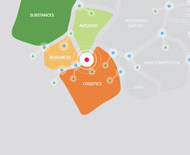
Did you know one metric ton of circuit boards contains 40-800 times as much gold as one metric ton of gold ore? Not to mention that up to 40% of...
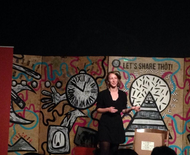
In late September, IFTF's Rebecca Chesney shared our food futures research at Five Thot's Idea People Thinking: Food event. From the relationship...

Each year, IFTF’s Technology Horizons Program conducts original research examining the underlying shifts taking place in science and technology,...
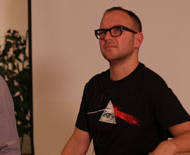
Building and maintaining a global communications network is a tremendous accomplishment. Unfortunately, our internet is broken in relation to the laws...
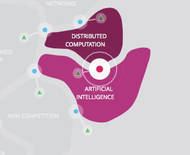
In 1999, then Procter & Gamble assistant brand manager (and now famous MIT technologist) Kevin Ashton pointed out that computers – and therefore the...
Have you seen this hysterical four minute video called A Conference Call In Real Life? If you haven’t, treat yourself to a watch right now:...
It’s the stuff of science fiction. Graphene is two dimensional material that has the potential to change how we interact with our three dimensional...

What can 10 days on a train teach us about our future food system? Sarah Smith shares what she learned about managing waste, sourcing locally, and...
The topic receives almost daily media coverage—from the incredible potential and dangers of data mining health records to how big data is changing the...

When thinking about the future, it is important to start somewhere. Especially if we believe that the future is something that we, as humans, can...
At IFTF, we’ve been writing for a while now about all the ways that our environments impact our health and well-being. From spaces that nudge us...
This declaration is a collective creation. Written and curated by members of the LGBTQ community across ages, backgrounds, and across the United...
It’s October 13, 2024—ten years since you signed on to the My2024 Declaration. The movement has tackled so many of the big issues in that...
It’s October 10, 2024—the anniversary of the game-changing My2024 event. You can trace so much of what’s good and important in your life back to the...
Check out the buzz from #My2024 and join the conversation at My2024.us, #My2024, and...
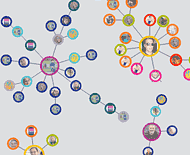
IFTF's next-generation Foresight Engine platform aims to build scaled-up conversations about urgent futures. What's new in the updated version? Read...
A couple of years ago, I happened upon one of my favorite descriptions for a world where virtually everything we own is networked: The Internet of the...
Take a quick journey through our 2014 Technology Horizons program's conference, Open Cities: How the Maker Mindset is Reinventing Urban Life. Over two...
IFTF is looking for LGBTQ volunteers to help us inspire and provoke responses for upcoming My2024 online event to imagine our lives as LGBTQ people in...